
 EN
EN  MS
MS  ZH
ZH 
In today’s digital age, earning money online is more accessible than ever, and affiliate marketing stands out as one of the most enticing avenues. Imagine the possibility of generating income by simply promoting products you love, without the hassle of managing inventory or customer service. This guide is your gateway to understanding affiliate marketing—a strategy that connects businesses with marketers to expand their reach and boost sales. With the right approach, you can transform your online presence into a lucrative income stream. But what exactly is affiliate marketing, and how can it revolutionise your financial future?
Key Takeaways
- Discover the fundamental concepts of affiliate marketing and its potential benefits
- Learn about different affiliate marketing models and how to choose the right one
- Explore essential tools that can enhance your affiliate marketing efforts
- Understand the importance of setting clear goals and strategies
- Gain insights from real-life success stories and common pitfalls to avoid
What is Affiliate Marketing and Why You Should Care

Affiliate marketing is a dynamic strategy that empowers individuals to earn commissions by promoting products and services. At its core, this business model connects merchants with marketers, who use their platforms to endorse products. The merchants then reward these marketers with a commission for every sale or action driven through their unique affiliate links. This approach thrives on the synergy between businesses and affiliates, offering a mutually beneficial opportunity for growth.
Understanding the Basics of Affiliate Marketing
The concept of affiliate marketing revolves around a simple yet powerful principle: collaboration. Merchants, also known as advertisers, collaborate with marketers or publishers to promote their products. This partnership is facilitated through affiliate networks and marketing platforms, which serve as intermediaries, connecting businesses with potential marketers. These platforms provide marketers with unique affiliate links, tracking their promotional efforts and ensuring they receive proper compensation for their contributions.
Affiliate marketing platforms are the backbone of this system, offering a range of tools and resources to streamline the process. By understanding the basics, you position yourself to maximise your potential earnings and success in this field. Whether you’re a seasoned digital marketer or a newcomer eager to explore new revenue streams, grasping these fundamentals is crucial.
Why Affiliate Marketing is a Game-Changer for Making Money Online
Affiliate marketing has become a game-changer for individuals seeking to make money online, thanks to its minimal upfront investment requirements. Unlike traditional businesses where you need to stock products or manage logistics, affiliate marketing allows you to tap into diverse niches and markets without owning physical inventory. This flexibility enables you to explore various interests and cater to different audiences, making it a highly attractive option for aspiring entrepreneurs.
The benefits of affiliate marketing extend beyond its low startup costs. It offers a pathway to passive income, as your efforts in promoting products can continue to generate revenue long after the initial work is done. Success in this field, however, hinges on strategic promotion and engagement with your audience. By effectively leveraging your online presence, you can build a scalable source of income that adapts to your lifestyle and goals.
The Role of Affiliate Marketers in the Digital Ecosystem
 Affiliate marketers play a pivotal role in the digital ecosystem, driving traffic and increasing visibility for partnered brands. Through content creation and innovative digital strategies, these marketers engage target audiences, fostering connections between consumers and businesses. By acting as intermediaries, they bridge the gap between potential buyers and advertisers, enhancing the overall customer experience.
Successful affiliate marketing partners contribute significantly to the growth of e-commerce ecosystems. Their efforts not only boost sales but also strengthen partnerships within the digital marketing landscape. As advertisers and publishers collaborate more closely, the impact of affiliate marketing continues to expand, creating a thriving environment for all parties involved.
The Different Types of Affiliate Marketing to Explore
When diving into affiliate marketing, understanding the different types of models is essential to crafting a successful strategy. Each model presents unique opportunities and challenges, catering to various business goals and marketer preferences.
Pay-Per-Sale vs. Pay-Per-Click vs. Pay-Per-Lead
The pay-per-sale model is a popular choice for affiliates seeking substantial commissions. In this setup, marketers earn a commission for every sale generated through their links. While this offers potentially higher rewards, it requires more conversions to achieve significant earnings. This model suits those confident in their ability to drive sales and build trust with their audience.
Conversely, the pay-per-click model compensates marketers based on the number of clicks their links receive. While the commission per click is typically lower, it provides a steady income stream for those capable of attracting high traffic volumes. This model is ideal for marketers with strong content that encourages user engagement.
Pay-per-lead focuses on driving user actions, such as sign-ups or form submissions. Affiliates earn commissions for generating leads, which can be highly valuable for businesses looking to expand their customer base. While the payouts may be lower, this model suits marketers skilled in capturing user interest and encouraging conversions.
Choosing the Right Type for Your Business Goals
Selecting the most suitable affiliate marketing model hinges on your business objectives and revenue potential. Pay-per-sale might be the right affiliate model if your goal is to maximise commissions, provided you’re confident in converting leads into customers. On the other hand, if you prefer a consistent income stream without the pressure of closing sales, pay-per-click could align better with your strategies.
Evaluating your target audience’s behaviour also plays a crucial role in choosing the right approach. Understanding what motivates your audience and how they interact with content can guide you towards the affiliate marketing model that best suits your goals. By aligning your marketing strategies with your objectives, you enhance your chances of success in the affiliate marketing journey.
Pros and Cons of Various Types of Affiliate Marketing
 Each type of affiliate marketing model comes with its own set of benefits and challenges. Pay-per-sale often offers higher commissions, making it attractive for those focused on substantial earnings. However, the need for more conversions might pose a challenge if your audience isn’t ready to make immediate purchases.
Pay-per-click provides a more predictable income stream, especially for marketers with content that attracts significant traffic. Yet, the lower commission per click means you need a large audience to achieve meaningful earnings. Pay-per-lead, while potentially lower in individual payouts, can generate valuable leads for businesses, making it a favourable option for those skilled in capturing user interest.
Understanding these pros and cons is essential for making informed decisions about your affiliate marketing strategy. By carefully weighing the benefits and challenges of each type, you can tailor your approach to suit your goals and maximise your earnings.
Essential Tools Every Aspiring Affiliate Marketer Needs
Embarking on your affiliate marketing journey requires the right tools to streamline your efforts and optimise your results. These tools empower you to manage your campaigns effectively and gain valuable insights into your audience’s behaviour.
Must-Have Marketing Tools for Beginners
Content management systems are invaluable for beginners, simplifying website creation and management. Platforms like WordPress offer user-friendly interfaces that allow you to build and maintain your online presence with ease. By leveraging these systems, you can focus on creating compelling content that resonates with your audience.
Keyword research tools are essential for identifying lucrative niches and trends. Tools like Google Keyword Planner enable you to uncover keywords that drive traffic and conversions, helping you tailor your content to meet audience demands. Additionally, email marketing platforms facilitate direct communication with your audience, nurturing relationships and encouraging engagement.
Social media schedulers, such as Buffer or Hootsuite, streamline your content distribution efforts. These tools allow you to plan and automate your social media posts, ensuring consistent visibility and engagement with your audience. By utilising these must-have marketing tools, you can enhance your affiliate marketing strategy and drive results.
How to Leverage Analytics to Boost Your Affiliate Strategy
Analytics tools are a goldmine of insights, offering a window into your traffic sources and user behaviour. Platforms like Google Analytics provide detailed data on how visitors interact with your content, enabling you to make informed decisions about your marketing strategies. By understanding your audience’s preferences and behaviours, you can optimise your campaigns for better conversions.
Data-driven decisions lie at the heart of successful affiliate marketing. Performance metrics help identify which campaigns are yielding the best results and which areas require improvement. Regular analysis ensures your strategies align with evolving audience needs, allowing you to stay ahead of the curve and maintain a competitive edge in the affiliate marketing landscape.
Finding the Best Affiliate Networks and Platforms
Affiliate networks play a crucial role in connecting marketers with brands seeking promotion. Choosing the right platform is essential for accessing diverse programmes and favourable commission rates. Platforms like Commission Factory and global affiliate networks offer a wide range of opportunities for collaboration and growth.
Reputation and support services are key factors in selecting an affiliate network. A reputable network provides reliable payment systems and responsive support, ensuring a smooth experience for affiliates. By exploring various networks, you expand your opportunities for collaboration and build a robust affiliate marketing strategy.
Choosing the Right Affiliate Program for Your Business
Selecting the right affiliate program is a pivotal step in your marketing journey. The right program aligns with your business goals and enhances your promotional efforts.
Factors to Consider When Selecting an Affiliate Program
Commission structures and payout frequencies are critical factors that impact your potential earnings. Programs with competitive commission rates and timely payouts provide a solid foundation for your affiliate marketing success. Evaluating these aspects ensures you’re maximising your earning potential.
Product relevance and audience alignment are equally important. Choosing products that resonate with your audience enhances promotional effectiveness and increases the likelihood of conversions. Additionally, a program’s reputation influences affiliate trust and partnership success. Evaluating support resources ensures you have access to the assistance you need for a successful affiliate marketing journey.
How to Evaluate Affiliate Program Offers
Detailed programme terms and conditions provide clarity on marketer obligations and expectations. Thoroughly reviewing these terms helps you understand the commitment required and the benefits offered. Competitive analysis of other programs within your niche can identify lucrative offers and highlight the best opportunities for collaboration.
Reviews and testimonials from other affiliates provide valuable insights into a program’s credibility and performance. Testing multiple programs allows you to discover the best fit for your marketing goals. By evaluating affiliate program offers meticulously, you position yourself for long-term success and growth.
Aligning Affiliate Programs with Your Business Objectives
The selection of affiliate programs should reflect your overarching business goals. Alignment ensures cohesive messaging and brand consistency across your marketing efforts. Long-term partnerships offer stability and mutual growth opportunities, allowing you to build lasting relationships with brands and affiliates.
Regular programme evaluations maintain alignment with evolving objectives and market trends. By continuously assessing your partnerships, you ensure they remain relevant and beneficial to your business. This proactive approach positions you for ongoing success in the ever-changing landscape of affiliate marketing.
How to Build a Successful Affiliate Marketing Strategy
Crafting a successful affiliate marketing strategy requires clear goals, engaging content, and a focus on building trust with your audience.
Setting Clear Goals and KPIs
Defined goals guide your marketing efforts and serve as a benchmark for measuring success. By setting clear objectives, you can focus your efforts where they matter most and track progress effectively. Key performance indicators (KPIs) are essential for monitoring your campaigns and highlighting areas for improvement.
Goal alignment with personal and business objectives enhances focus and ensures your strategies remain relevant. Regular goal reviews allow you to adapt to changing circumstances and optimise your approach for continued success.
Creating Engaging Content for Your Audience
Engaging content is the cornerstone of successful affiliate marketing. Your content should address audience pain points and offer solutions, positioning you as a trusted source of information. Storytelling captures attention and encourages action, creating a connection with your audience.
Visuals and multimedia elements enhance the appeal and shareability of your content, making it more likely to resonate with readers. Consistent content creation fosters audience loyalty and trust, building a strong foundation for your affiliate marketing efforts.
Building Trust and Credibility as an Affiliate Marketer
Transparent communication is vital for building consumer confidence in your recommendations. Authentic endorsements resonate with audiences and drive conversions, as consumers value genuine opinions and experiences. Demonstrating expertise and knowledge establishes credibility, positioning you as a reliable source of information.
Ongoing engagement and responsiveness maintain trust over time, ensuring your audience remains connected to your brand. By building trust and credibility, you lay the groundwork for a successful and sustainable affiliate marketing strategy.
Top Tips for Beginners to Maximise Earnings
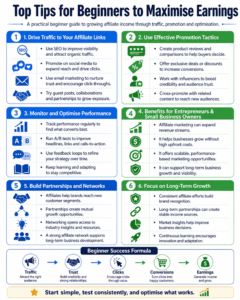
How to Drive Traffic to Your Affiliate Links
SEO strategies are essential for improving search visibility and attracting organic traffic to your affiliate links. By optimising your content for relevant keywords, you increase the likelihood of reaching potential customers actively searching for your products. Social media promotion expands your reach, allowing you to engage with a broader audience and drive traffic to your links.
Email marketing is a powerful tool for nurturing relationships and encouraging click-throughs to your affiliate links. By providing valuable content and exclusive offers, you build a loyal audience eager to explore your recommendations. Collaborative marketing efforts, such as guest blogging or partnerships, amplify your exposure and drive additional traffic to your links.
Effective Promotion Tactics for Affiliate Products
Product reviews and comparisons inform and persuade undecided consumers, showcasing the benefits and features of the products you promote. Exclusive offers and discounts incentivise purchases through your affiliate links, providing added value to your audience.
Influencer partnerships increase credibility and audience engagement, leveraging the trust and reach of established personalities in your niche. Cross-promotion with related content broadens your promotional impact, introducing your affiliate products to new audiences and increasing your earning potential.
Monitoring and Optimising Your Performance
Regular performance analysis is crucial for identifying high-converting strategies and areas for improvement. A/B testing refines your tactics, allowing you to experiment with different approaches and optimise your results. Feedback loops inform ongoing optimisation efforts, ensuring your strategies remain effective and aligned with your goals.
Continuous learning and adaptation drive long-term success in the ever-changing landscape of affiliate marketing. By staying informed and responsive to new trends and opportunities, you position yourself for sustained growth and profitability.
The Benefits of Affiliate Marketing for Entrepreneurs and Small Business Owners
Affiliate marketing offers a wealth of benefits for entrepreneurs and small business owners, providing opportunities for revenue expansion and network building.
How Affiliate Marketing Can Expand Revenue Streams
Affiliates provide access to new customer segments and markets, enabling businesses to diversify their income sources and enhance financial stability. By tapping into the reach and influence of affiliates, businesses can expand their sales channels without the need for significant upfront investments.
Affiliate partnerships offer scalable growth opportunities, allowing businesses to adjust their marketing efforts based on performance and demand. This cost-effective marketing approach minimises financial risk while maximising potential returns, making it an attractive option for entrepreneurs and small business owners looking to grow their businesses.
Building Partnerships and Networks Through Affiliates
Collaboration with affiliates extends brand reach and visibility, introducing your products to new audiences and markets. Strategic partnerships foster mutually beneficial relationships, creating a network of affiliates who support your business goals and objectives.
Networking with affiliates increases access to industry insights and resources, providing valuable information and opportunities for innovation and growth. A strong network of affiliates supports business development and helps drive long-term success in the competitive world of online marketing.
Long-term Benefits and Growth Opportunities
Sustained affiliate efforts contribute to brand growth and recognition, establishing your business as a trusted and reliable source in your industry. Long-term partnerships with affiliates create reliable income sources, offering stability and consistency in your revenue streams.
Market insights gained through working with affiliates inform your business strategies, enabling you to make data-driven decisions and adapt to changing market conditions. Continuous learning from affiliates drives innovation and adaptation, ensuring your business remains competitive and relevant in the ever-evolving digital landscape.
Real-Life Success Stories from Affiliate Marketers in Malaysia
Malaysia is home to many successful affiliate marketers who have leveraged their creativity and determination to achieve remarkable results. These inspiring journeys offer valuable insights and lessons for aspiring affiliates.
Inspiring Journeys of Successful Affiliate Marketers
Malaysian affiliates have used creative strategies to achieve success, often finding unique ways to connect with their audiences and promote products effectively. Personal stories highlight diverse approaches, showcasing how different strategies can lead to success in various niches and markets.
Success often stems from perseverance and adaptability, with many affiliates overcoming challenges and setbacks to achieve their goals. These inspiring journeys motivate others to pursue affiliate marketing, demonstrating that with dedication and effort, anyone can succeed in this exciting field.
Key Takeaways from Malaysian Affiliate Marketers
Effective strategies often involve a niche focus and a deep understanding of audience needs and preferences. Building relationships and networking play crucial roles in success, with many Malaysian marketers emphasising the importance of collaboration and partnership in their affiliate marketing efforts.
Consistent effort and commitment yield long-term results, with successful affiliates demonstrating the value of persistence and determination in achieving their goals. Malaysian marketers offer valuable lessons for aspiring affiliates, providing insights and guidance for those looking to embark on their affiliate marketing journey.
How Malaysian Marketers Overcame Challenges
Overcoming obstacles often involves strategic pivots and innovation, with many affiliates finding creative solutions to overcome challenges and achieve success. Resourcefulness and resilience help navigate competitive markets, ensuring continued growth and success in the face of adversity.
Learning from failures and adapting to new circumstances ensures continued growth and development, with many affiliates embracing change and innovation as key drivers of success. Collaborative efforts foster problem-solving and success, with many Malaysian marketers working together to share insights and support one another in their affiliate marketing endeavours.
Common Mistakes to Avoid in Your Affiliate Marketing Journey
Embarking on your affiliate marketing journey can be daunting, but by recognising common pitfalls and challenges, you can navigate your path to success more effectively.
Pitfalls Beginners Should Watch Out For
One common pitfall is a lack of research, which can lead to poor programme and niche selection. Without proper understanding and analysis, you may find yourself promoting products that don’t resonate with your audience, resulting in ineffective marketing efforts.
Neglecting audience needs is another trap to avoid. By failing to address the specific interests and concerns of your audience, you risk missing out on valuable engagement and conversion opportunities. Overreliance on a single strategy limits growth potential, as diversification is crucial for adapting to changing market conditions and audience preferences.
Ignoring performance metrics prevents optimisation and improvement, as without regular analysis, you may miss out on valuable insights that could enhance your affiliate marketing efforts.
How to Navigate the Challenges of Affiliate Marketing
Anticipating challenges prepares marketers for potential setbacks, enabling you to develop contingency plans and adapt to unforeseen circumstances. Adaptability and flexibility are key traits for successful affiliate marketers, allowing for swift responses to changes in the market and audience behaviour.
Strategic planning and goal setting guide efforts and minimise risks, providing a clear roadmap for your affiliate marketing journey. Continuous learning fosters resilience and problem-solving capabilities, equipping you with the tools and knowledge needed to overcome challenges and achieve long-term success.
Learning from the Mistakes of Other Affiliate Marketers
Analysing case studies provides insights into common pitfalls and challenges faced by other affiliate marketers. By learning from their experiences, you can avoid making the same mistakes and accelerate your own growth and development.
Peer feedback offers valuable perspectives and advice, providing insights and guidance that can enhance your affiliate marketing efforts. Learning from others’ experiences accelerates personal growth, helping you refine your strategies and improve your chances of success.
Avoiding known mistakes enhances the likelihood of success, as by recognising and addressing potential issues early on, you can optimise your affiliate marketing strategy and maximise your earning potential.
Future Trends in Affiliate Marketing You Need to Watch

The affiliate marketing landscape is constantly evolving, with emerging technologies and trends shaping the future of the industry. Staying informed about these developments ensures you remain competitive and prepared for the opportunities and challenges ahead.
Emerging Technologies Shaping Affiliate Marketing
Artificial intelligence is enhancing targeting and personalisation efforts in affiliate marketing. With AI, you can analyse consumer data to deliver tailored recommendations, improving the relevance and effectiveness of your promotions. This technology allows for a more refined approach, increasing the likelihood of conversions and customer satisfaction.
Blockchain technology is also making waves, promising greater transparency and security in affiliate transactions. By using blockchain, you can ensure that tracking and payments are accurate and tamper-proof, building trust among all parties involved. This innovation not only enhances security but also streamlines processes, making affiliate marketing more efficient.
Mobile optimisation is increasingly important as the number of mobile users continues to rise. Ensuring your content and promotions are mobile-friendly is crucial for reaching and engaging this growing audience. Finally, automation tools are streamlining processes, reducing manual effort, and allowing marketers to focus on strategic decisions and creative content.
How Trends Impact Affiliate Marketers and Businesses
Technological advancements in affiliate marketing create new opportunities and challenges. As these technologies evolve, businesses must adapt to remain competitive in the shifting landscape. For marketers, trend awareness enables the leveraging of emerging tools and tactics to enhance their strategies and outcomes.
Businesses benefit from staying ahead of trends by integrating the latest technologies into their marketing efforts. This proactive adaptation ensures continued relevance and success, allowing businesses to capitalise on new opportunities and maintain a competitive edge. Marketers who embrace innovation and experimentation are better positioned to navigate these changes and achieve sustained growth.
Preparing for the Future of Affiliate Marketing
Continuous education is vital for keeping marketers informed about industry changes and emerging trends. By staying up-to-date with developments, you can better anticipate shifts in the market and adjust your strategies accordingly. Experimentation and innovation should be at the forefront of your approach, driving adaptation and growth.
Staying informed about trends ensures strategic foresight, enabling you to make data-driven decisions and maintain a competitive edge. Future preparedness positions marketers for ongoing success, allowing them to thrive in the dynamic world of affiliate marketing. By embracing change and continually refining your strategies, you set the stage for a prosperous and fulfilling affiliate marketing journey.
—
Affiliate marketing offers a wealth of opportunities for those willing to invest the time and effort to understand its intricacies. By grasping the basics, selecting the right models, and leveraging essential tools, you can craft a strategy that aligns with your goals and maximises your earnings. Remember to learn from others, adapt to new trends, and stay committed to your journey.
As you embark on your affiliate marketing adventure, what strategies will you prioritise to ensure your success in this ever-evolving digital landscape? Your insights and experiences can inspire fellow marketers, so don’t hesitate to share your thoughts and join the conversation!
Frequently Asked Questions
How do I start affiliate marketing?
Beginning your journey in affiliate marketing is simpler than you might think. Start by selecting a niche that genuinely interests you; this ensures authenticity and engagement with your audience. Research and join affiliate programmes that align with your chosen niche. Create a website or blog as your primary platform to share content and promote affiliate products. Craft valuable and insightful content that resonates with your audience, subtly incorporating affiliate links. Consistently engage with your audience on social media, and always track your performance to refine your strategy for better results.
Does affiliate marketing work in Malaysia?
Absolutely, affiliate marketing thrives in Malaysia, just as it does globally. With a growing digital infrastructure and a tech-savvy population, Malaysia presents a ripe market for affiliate marketers. Local and international brands offer affiliate programmes tailored for Malaysian audiences, making it easier to find products that resonate with local consumers. Understanding cultural nuances and consumer behaviour in Malaysia can significantly enhance your marketing strategies. By creating relevant content and leveraging social media, you can effectively tap into this dynamic market and witness substantial success.